Your Home Is Your Most Important Investment. Why Do We Treat Its Interiors as an Afterthought?
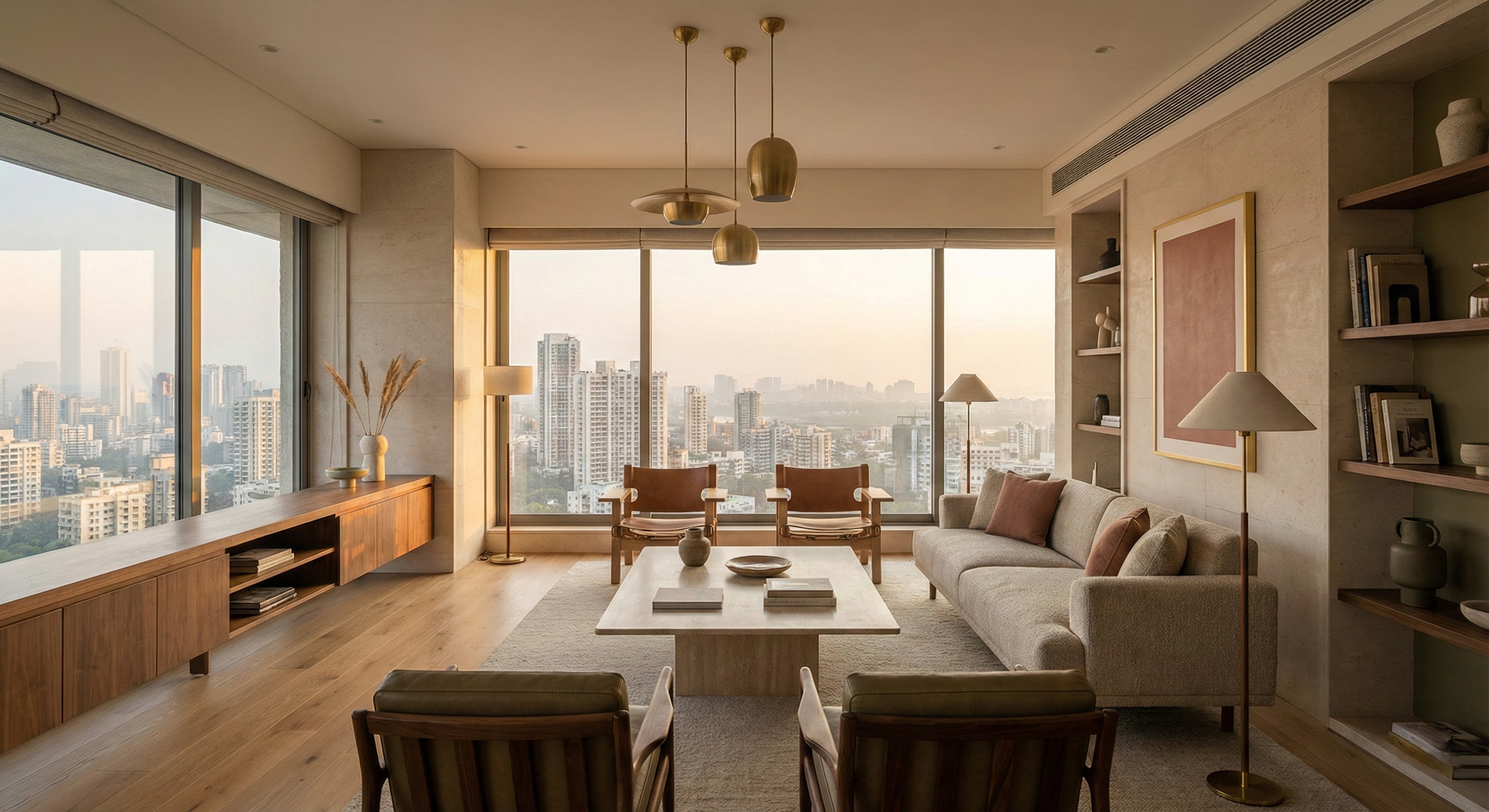
Buying a home is rarely an impulsive decision.
It is researched, debated, compared, negotiated, and planned with care. Location, layout, light, views, long-term value, all of it is weighed thoughtfully.
And yet, once the keys are handed over, something strange happens.
When it comes to interiors, the same level of thinking often disappears.
The contradiction no one talks about
We protect the structure of our home fiercely.
But we frequently underplay what happens inside it.
Suddenly, decisions are driven by who can do it faster, cheaper, or with fewer conversations. The focus shifts from longevity to immediacy. From alignment to adjustment. From intent to output.
The result is a space that looks acceptable on day one, but slowly reveals its compromises over time.
Interiors are not decoration. They are infrastructure.
Good interiors are not about finishes alone.
They are about how a home functions every single day.
How storage supports your routines.
How lighting responds to different moments of the day.
How materials age under real use.
How spaces adapt as life evolves.
When interiors are treated as a cost to minimise, these questions are often skipped. What remains is a surface-level solution that works until it doesn’t.
And when it stops working, it rarely fails loudly.
It fails quietly, through inconvenience, wear, and constant small frustrations.
The real price of the lowest option
The cheapest interior choice almost always looks efficient at the start.
But its true cost reveals itself gradually.
Repeated repairs.
Premature replacements.
Inconsistent finishes.
Spaces that never quite feel settled.
Most importantly, it robs the home of a sense of ease. A well-designed home feels resolved. Nothing needs explaining. Nothing feels temporary.
That feeling does not come from spending impulsively. It comes from thinking clearly.
Thoughtful design is a multiplier
When interiors are approached with the same seriousness as the home itself, something shifts.
Decisions become intentional.
Materials are chosen for performance, not just appearance.
Layouts are planned for how you live, not how a brochure looks.
Over time, this approach pays back quietly. Through durability. Through comfort. Through a home that feels relevant years later, not dated or compromised.
This is not about excess.
It is about respect for the space you live in every day.
A question worth asking
If your home is one of the most significant decisions you will ever make, why would the environment you live inside it be treated casually?
Interiors are not an add-on.
They are what make a house truly livable.
Before choosing the lowest option, it is worth pausing to ask whether the decision is aligned with the life you want to live in that space.
Because good interiors do not shout.
They last.