Homes Should Be Designed Once: Why "We'll Redo It Later" Is Costing You More Than You Think
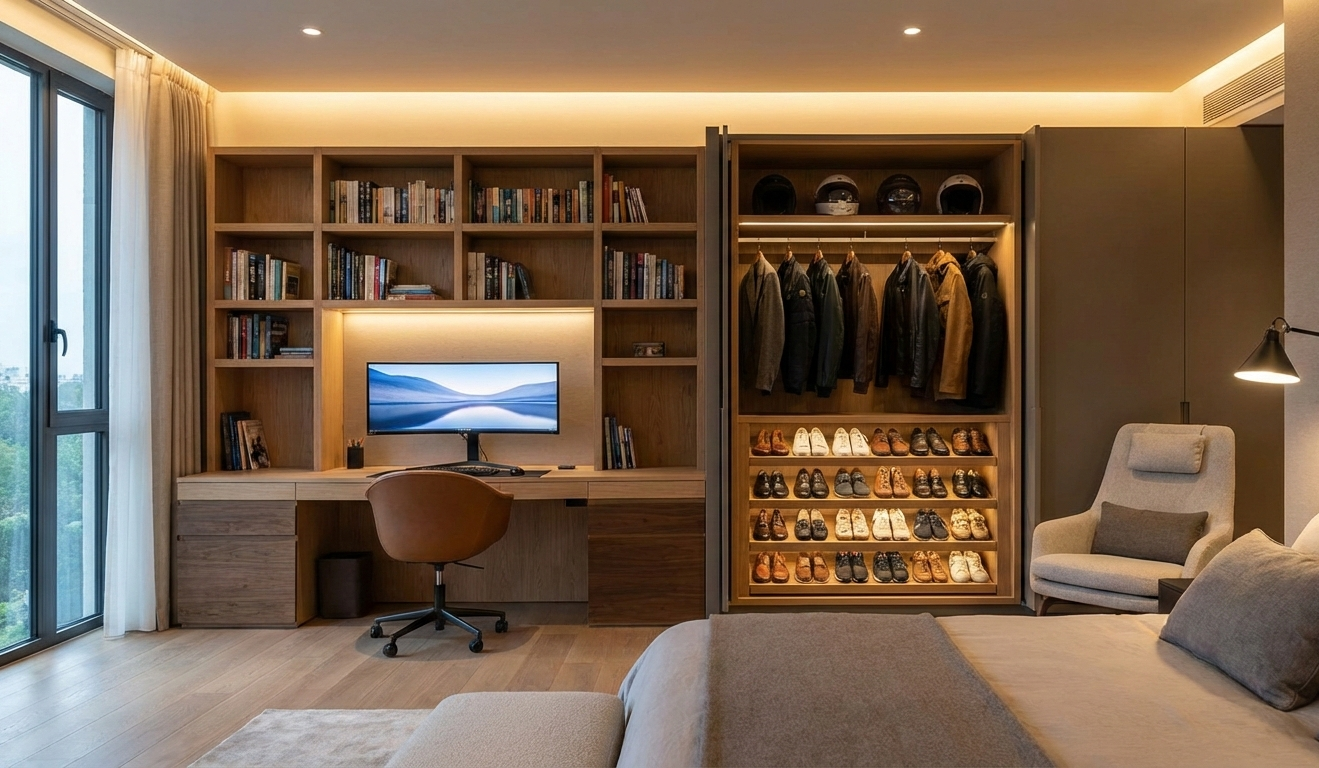
Often new homeowners in Mumbai and across India say, "We'll get the basics done now and redo it properly later." To us at Studio Redefine, that mindset is not only costly, it's fundamentally misaligned with what a home truly represents.
Your home isn't just another project on your checklist. It's your sanctuary, your legacy, and the stage where your life unfolds. That's why we believe your space should be designed once, with intention, precision, and permanence.
The True Cost of "Temporary" Interior Design
When homes are designed with the idea of future upgrades, what begins as a "minimal setup" quickly spirals into something far more expensive than anyone anticipated.
Here's what actually happens: you install basic wardrobes now, planning to replace them in three years. You choose budget flooring because "we'll upgrade later." You skip proper lighting design because "we can always add more lights."
But later never comes the way you imagined. Instead, you're living with a space that never quite works. And when you finally decide to upgrade, you're not just paying for the new materials, you're paying to remove the old ones, repair the damage, rework the electrical, and deal with the disruption all over again.
Financially, it adds up to far more than if you'd done it right the first time. Emotionally, it leads to decision fatigue, ongoing dissatisfaction, and years of living in a home that feels temporary.
Designing with a long-term vision from the beginning isn't just more economical, it's far more fulfilling. And for homeowners in cities like Mumbai where real estate is a significant investment, treating interior design as an afterthought is a costly mistake.
The Math That Most People Miss: A Slightly Higher Budget Now vs. Paying Twice Later
Here's a conversation we have with almost every client: "Can we reduce the budget and upgrade in a few years?"
The logic seems sound. Save money now, upgrade when you have more. But the math tells a different story.
Let's say you're furnishing a bedroom. You can install a basic laminate wardrobe for ₹80,000, or invest in a well-designed, durable system for ₹1,20,000. The difference feels significant: ₹40,000.
But here's what happens in four years when you're ready to "upgrade":
You'll pay ₹10,000 to remove the old wardrobe and dispose of it. Another ₹15,000-25,000 to repair the walls, repaint, and fix any electrical work that was routed through it. Then you'll pay ₹1,40,000-1,80,000 for the new wardrobe (prices don't stay static). Add in the cost of temporarily moving your belongings, the disruption to your daily life, and the time spent managing contractors again.
Total: ₹2,00,000+ and weeks of upheaval.
Compare that to the original ₹1,40,000, done once, with no disruption, no waste, and a wardrobe that's been serving you beautifully for those four years and will last another six.
The incremental cost of doing it right the first time is almost always lower than the total cost of doing it twice. And that's just one element. Multiply this across flooring, lighting, kitchen cabinets, bathroom fittings, and you're looking at lakhs in unnecessary expenses.
The question isn't whether you can afford to do it properly now. It's whether you can afford not to.
Designing for Your Life, Not for Instagram Trends
While design trends come and go (remember when everyone wanted an exposed brick wall?), your lifestyle and core needs remain central. A growing family needs flexible spaces. Working professionals need functional home offices. Multi-generational households need privacy and connection in equal measure.
By investing in durable materials that age beautifully, layouts that flow naturally with your daily routines, and aesthetics that reflect who you are (not what's trending on Pinterest), your home remains relevant not just for the next year, but for the next decade and beyond.
This is especially important in Indian homes where spaces need to accommodate festivals, guests, changing family structures, and evolving needs over time.
Emotional Durability: Designing Homes That Grow With You
Your home should evolve with you, not against you. That's why we build flexibility into every design: clever storage that adapts as your belongings change, multipurpose rooms that transition from nursery to study to guest room, and a design palette that ages gracefully rather than feeling dated.
When your family grows, when your work changes, when your lifestyle shifts, your home should support the transition seamlessly. This is what we mean by emotional durability, designing spaces that remain relevant and beloved through every phase of life.
And here's where the budget conversation becomes crucial: investing slightly more in adaptable, high-quality design elements now means you won't need to redesign when life changes. A ₹30,000 increase in your initial budget for modular furniture or flexible layouts can save you ₹2-3 lakhs in redesign costs five years later when your needs inevitably shift.
The homes that truly last aren't the ones with the cheapest initial price tag. They're the ones designed with enough foresight and quality that they don't need constant intervention.
What "Designing Once" Really Means
Designing once doesn't mean inflexible or over-engineered. It doesn't mean spending recklessly or over-designing every corner.
It means designing with such clarity, care, and understanding of how you live that redoing it becomes unnecessary. It means choosing quality over quantity, form paired with function, and soul over surface-level aesthetics.
It means working with interior designers who take the time to understand not just what your home should look like, but how it should work for your specific life in your specific city, whether that's Mumbai, Pune, or anywhere else in India.
Why Studio Redefine Designs Homes as Once-in-a-Generation Expressions
At Studio Redefine, we approach every residential interior design project as a once-in-a-generation expression. Not because we're precious about our work, but because we understand what your home means to you.
When it's done right the first time, with full consideration of how you live, what you value, and how your life might evolve, it doesn't need to be done again.
That's not just good design. That's respect for your investment, your time, and your life.
Your home deserves to be designed once. Properly. Permanently.